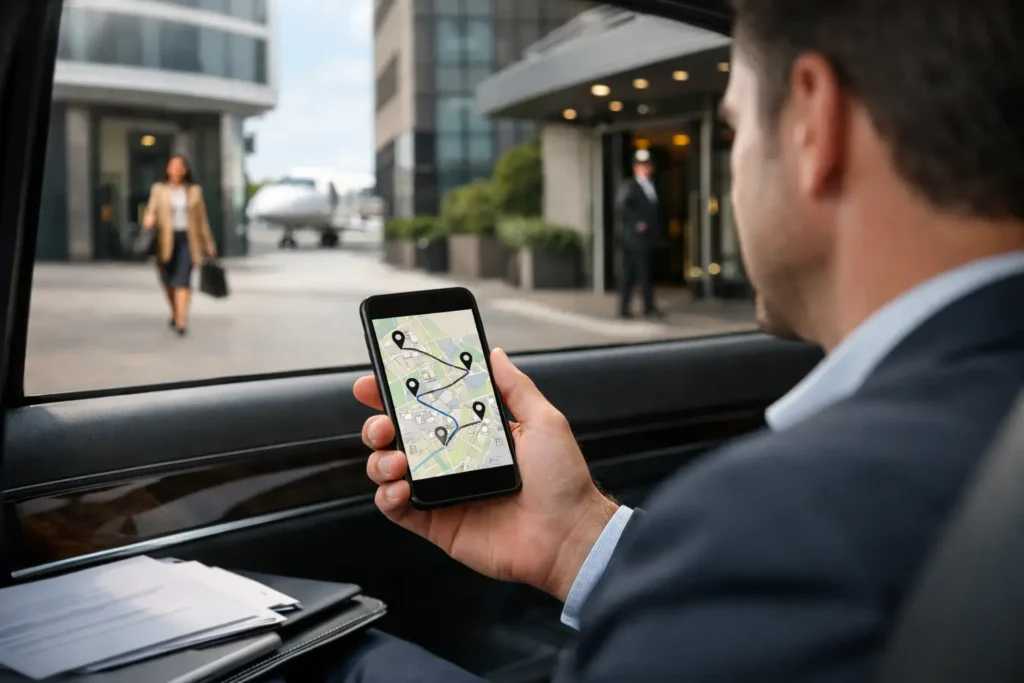
A major conference can lose its polish before the opening remarks begin. One delayed airport pickup, an unclear hotel departure point, or a packed shuttle arriving late to the venue can leave VIPs, speakers, and clients with the wrong impression. This conference transport example shows how a premium transportation plan protects the schedule, the guest experience, and the reputation of the organization hosting the event.
Consider a three-day leadership summit in Washington, DC. The company has invited 180 attendees, including board members, keynote speakers, senior executives, and out-of-town clients. Guests are staying at a downtown hotel, sessions are held at a nearby conference venue, and an evening reception takes place at a private location in Georgetown. The agenda is ambitious. Transportation cannot be.
The Conference Transport Example: A Three-Day Executive Summit
The goal is not simply to move people from one address to another. The goal is to make every arrival feel considered, every departure feel effortless, and every transition reflect the standard of the event itself.
The plan begins with a transportation manifest prepared well before the first guest lands. It identifies every airport arrival, flight number, guest name, mobile contact, pickup window, luggage requirement, hotel, venue, and return departure. It also separates those guests whose role requires a different level of attention: keynote speakers, C-suite attendees, overseas visitors, and clients being hosted by the organization.
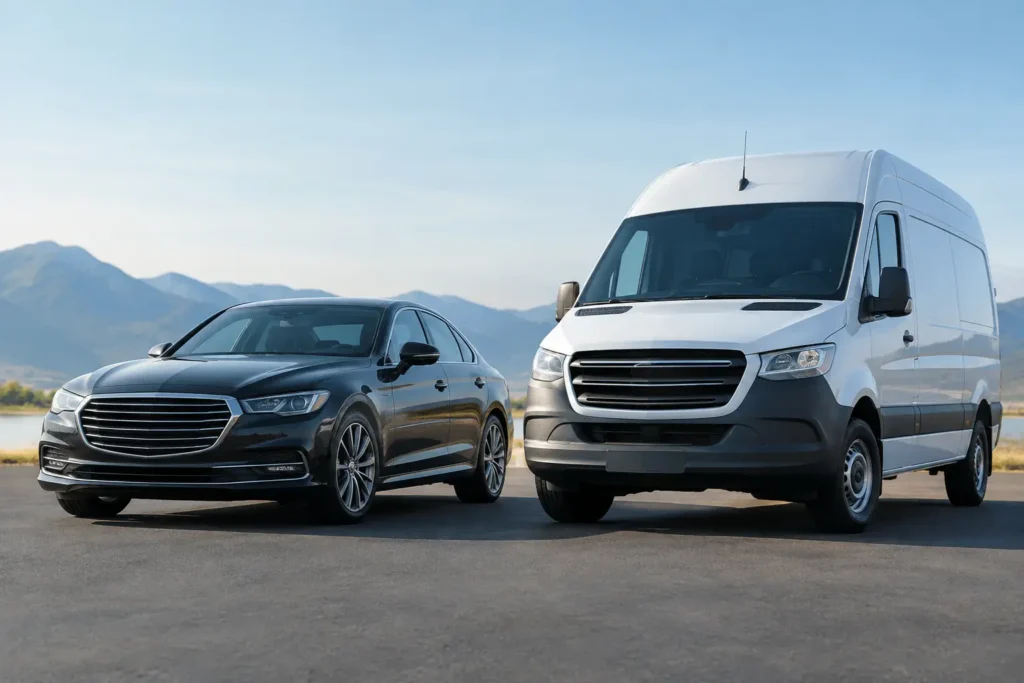
For this event, the transportation program uses executive sedans and luxury SUVs for individual VIP airport transfers, Mercedes Sprinter vans for small leadership teams, and motorcoaches for scheduled attendee movements. Each vehicle type has a purpose. Assigning every guest to the largest available vehicle may appear generous, but it can create needless cost and inefficient staging. Sending a keynote speaker in a shared shuttle, however, can compromise privacy and timing.
Day One: Airport Arrivals That Respect the Guest
Arrival day is where many conference transportation plans become reactive. Flights change, travelers collect luggage at different speeds, and airport traffic around Reagan National or Dulles can shift quickly. A premium plan accounts for those realities rather than treating them as exceptions.
VIP guests are assigned private airport service with chauffeur flight monitoring. Their chauffeur arrives with the appropriate vehicle, tracks the flight, adjusts for delays, and provides clear pickup coordination. No executive should be left guessing whether the car is waiting at the terminal, circling the airport, or delayed in traffic.
For attendees arriving in clusters, scheduled Sprinter van departures are more efficient. The conference organizer establishes defined airport departure windows, such as every 45 minutes during the main arrival period. Guests receive their instructions in advance: where to meet, how long they may wait, and whom to contact if their flight changes. This clarity protects the experience without promising an unrealistic instant departure for every traveler.
A discreet hospitality representative at the hotel can complement the transportation team during peak arrival hours. The chauffeur handles the road. The representative helps ensure guests know where to go next, particularly when registration, welcome gifts, or room assignments are part of the arrival experience.
Designing the Daily Movement Plan
The hotel-to-venue transfer may cover only a short distance, but it deserves the same discipline as an airport run. In Washington, DC, a five-mile route can vary dramatically based on security activity, construction, rush-hour congestion, or a major event near the venue. The transport schedule needs a time buffer that reflects the city, not a map estimate made at midnight.
For the summit, motorcoaches begin loading 35 minutes before the first session. They depart in waves rather than waiting until every seat is filled. The first wave carries early presenters, sponsors, and attendees who want time for coffee and networking. The second wave carries the larger attendee group. A final smaller vehicle remains available for late-arriving speakers or last-minute operational needs.
This structure prevents one delayed guest from holding an entire group captive. It also gives the event team options. If a speaker is running behind, a luxury SUV can be dispatched without disrupting the motorcoach schedule. If rain begins during the afternoon break, the team can advance vehicles to a covered loading area.
The difference is control. Conference transportation works best when the planner has a deliberate primary schedule and a dignified contingency plan.
Executive Cars for Those Who Cannot Be Delayed
Not every guest should travel on the same timetable. A board chair may have a private breakfast before the program. A keynote speaker may need quiet time between sessions. A client host may need to arrive early to welcome guests.
Dedicated executive sedans or luxury SUVs are appropriate for these movements. They offer privacy for calls, a calm environment before a presentation, and direct routing when every minute matters. They also prevent a high-priority guest from becoming dependent on a group departure that may change without warning.
This is where the trade-off between cost and consequence should be evaluated honestly. Private service is not necessary for every attendee. It is often necessary for the people whose presence, schedule, or relationship carries outsized value for the event.
Evening Events Require Their Own Strategy
A reception is not merely the final transportation leg of the day. It is often the moment when attendees decide whether the conference felt merely organized or genuinely distinguished.
In this example, guests travel from the conference venue to a Georgetown reception. Instead of announcing a vague “shuttle service available” message, the event team provides exact vehicle departure windows, pickup locations, and a return-service schedule. Motorcoaches handle the majority of guests, while private SUVs are reserved for senior hosts, keynote speakers, and guests with accessibility or timing considerations.
Return transportation should be designed with as much care as the arrival. Some attendees will leave early for calls or flights. Others will remain until the reception closes. A fixed return schedule works for the main group, but a limited number of on-call vehicles protects the event from leaving important guests waiting at the curb.
Alcohol service also changes the equation. Once a reception includes cocktails, professionally chauffeured transportation becomes a practical expression of duty of care. Guests can enjoy the evening without navigating an unfamiliar city, arranging a last-minute ride, or placing their safety in question.
The Details That Keep the Plan Polished
A premium conference transportation operation is built on information, communication, and authority. The vehicles matter, but the coordination behind them matters just as much.
The event organizer should designate one transportation decision-maker and one backup. Chauffeurs and dispatch personnel need a direct point of contact empowered to approve changes. When five different staff members give conflicting instructions, even the finest fleet cannot create order.
Guest-facing communication should be elegant and brief. Share pickup times, locations, vehicle identifiers where appropriate, and a single assistance number. Avoid overloading attendees with operational notes they do not need. The internal team can manage the complex manifest; the guest should feel only the confidence of a well-run itinerary.
For high-profile gatherings, vehicle presentation is part of the event brand. Clean, late-model vehicles, professionally dressed chauffeurs, discreet signage, and courteous loading assistance all reinforce that the host planned for more than logistics. Your reputation travels with your guests.
Monarch Bus & Limo approaches conference service with that standard in mind, pairing luxury fleet options with chauffeur-led precision for executive travel throughout the DMV.
What This Example Teaches Event Planners
The strongest transportation plan is not the one with the most vehicles. It is the one that gives each group the right level of service while preserving flexibility for the moments no itinerary can fully predict.
Start by classifying travelers according to their needs: individual VIPs, speakers, leadership groups, general attendees, and guests requiring special accommodations. Then build around the event’s true pressure points: flight arrivals, first-session timing, off-site functions, and final departures. Those are the moments when a transportation lapse is most visible.
Finally, do not treat transport as an item to finalize after the venue and catering are complete. At a conference, the ride is often the first and last experience a guest has with the event. Reserve the fleet early, establish a clear command structure, and give every important arrival the dignity it deserves.
Keep Discovering
Ready to Ride, Anywhere in the DMV
Popular Services
Explore the Fleet
Service Areas

How to Prepare for an Executive Guest Arrival
Sedan Versus Sprinter Van for Your Arrival