
A wedding day can lose its polish long before the ceremony begins. It happens when guests circle an unfamiliar venue, wait in formalwear outside a hotel, or arrive in scattered groups after the processional has started. Maryland wedding guest transportation is not merely a courtesy. It is the operating plan behind a composed, punctual celebration.
For couples hosting at a Maryland estate, waterfront venue, country club, or ballroom, transportation sets the tone before the first toast. A professionally managed fleet brings guests in with confidence, keeps the timeline intact, and allows the couple to remain present for the moments that matter.
Treat Guest Transportation as Part of the Guest Experience
The best weddings feel effortless to the people attending them. That feeling is carefully designed. Guests should know where to be, when to be there, and how they will return without having to navigate unfamiliar roads, parking restrictions, late-night driving, or a complicated rideshare pickup zone.
Transportation is especially valuable when the ceremony and reception are in separate locations, when hotel blocks are located near Bethesda, National Harbor, or downtown Washington, DC, or when the venue sits on a rural property with limited parking. It also brings order to events where guests may enjoy an open bar and should not be expected to drive afterward.
The objective is not simply to move people from point A to point B. It is to create an arrival that feels considered. Guests step from a clean, climate-controlled vehicle, are greeted by a professional chauffeur, and enter the celebration collected rather than hurried. That distinction reflects directly on the hosts.
Start With the Real Movement of the Day
A transportation plan should follow the actual rhythm of the wedding, not a generic schedule. Before selecting vehicles, map the day in detail: hotel departure windows, ceremony start time, travel duration, photography periods, cocktail hour, reception end time, and any after-party plans.
Build in more time than a navigation app suggests. Maryland traffic can shift quickly, particularly around the Capital Beltway, I-270, the Baltimore-Washington Parkway, and major event corridors. A plan that looks efficient on paper can become stressful when it leaves no margin for a delayed elevator at the hotel, a guest with mobility needs, or a late ceremony dismissal.
Arrival service should be intentionally early
For a ceremony, the first guest shuttle should generally arrive early enough for guests to find their seats without rushing. Multiple departure waves are often smarter than one large departure, especially when guests have different readiness schedules or when the hotel lobby cannot comfortably hold everyone at once.
A common mistake is scheduling every guest on one vehicle at one exact time. That works only for a small, highly coordinated group. For a larger wedding, staggered departures reduce crowding and give the transportation team room to recover if one group takes longer to board.
Departure service requires equal attention
The return plan is where many weddings become disorganized. Guests leave receptions at different times. Older relatives may be ready well before the dance floor empties, while others may want to stay through the final song. A single end-of-night shuttle can be appropriate for an intimate event, but it can leave many guests waiting or encourage premature departures.
For most formal receptions, a continuous return service during the final portion of the evening is the more gracious choice. It allows guests to depart when ready while preserving a responsible option for everyone who has celebrated fully.
Choose Vehicles for the Guest List You Actually Have
The right vehicle mix depends on group size, luggage, venue access, and the atmosphere of the event. Bigger is not always better. A full-size charter vehicle may be efficient for a large hotel block, but a Mercedes Sprinter van or luxury mini-coach may feel more fitting for a smaller wedding party or VIP family group.
Executive sedans and luxury SUVs are ideal for parents, grandparents, the officiant, or guests who require a quieter and more private experience. They are also a refined choice for transporting the couple between a first-look location, ceremony, and reception.
For larger guest movements, shuttle-style vehicles or charter options create clarity and scale. The essential consideration is that the vehicle matches the road and the venue. Some Maryland properties have narrow drives, tight turnarounds, limited loading areas, or restrictions on large coaches. A transportation provider should review these details in advance rather than discover them with a full vehicle on the wedding day.
Comfort matters as much as capacity. Guests in gowns, tuxedos, and formal shoes need sensible boarding, clean interiors, reliable climate control, and enough room to settle in. If the ride is longer than a few minutes, vehicle quality becomes part of the event itself.
Make Communication Elegant and Unmistakable
Even an exceptional fleet cannot compensate for unclear instructions. Guests need concise transportation information well before the wedding weekend, then a simple reminder on the day itself.
Include the pickup address, the departure windows, the vehicle or service name guests should look for, and a contact number for urgent coordination. If there are multiple hotel properties, separate the instructions clearly. Never assume a guest will know which shuttle applies to them.
For high-attendance events, designate a transportation point person who is not the couple. This may be a planner, venue coordinator, family representative, or transportation coordinator. Their role is to handle practical questions, confirm boarding counts, and communicate any adjustments without interrupting the couple’s day.
The best communication is calm and direct. Guests do not need a page of logistics. They need confidence that a polished plan is in place.
Account for the Guests Who Need More Care
A refined transportation plan anticipates the guests who may not move at the pace of the crowd. That can include grandparents, guests with mobility limitations, families with young children, out-of-town visitors, or anyone unfamiliar with the area.
Discuss accessibility needs early. Depending on the requirements, that may mean arranging a vehicle with easier entry, setting aside front seating, allowing extra boarding time, or providing a private car service for a particular guest. The right solution depends on the individual, the vehicle, and the venue layout.
VIP transportation also deserves its own consideration. Parents, immediate family, and honored guests often have different schedules from the main guest group. They may need to arrive earlier for photographs or remain later for private farewells. Separating their transportation from the general shuttle schedule gives them the flexibility the day requires.
Ask the Questions That Protect the Timeline
Luxury transportation is defined by preparation, not promises. When comparing providers, ask how they manage schedule changes, traffic delays, vehicle substitutions, after-hours communication, and venue coordination. A low quote may not include the operational planning that prevents a minor delay from becoming a visible problem.
You should also confirm how chauffeurs receive their itinerary, whether the company coordinates directly with the planner or venue, and what happens if the reception runs late. Wedding timelines are living documents. The transportation partner should be equipped to respond with poise, not confusion.
Monarch Bus & Limo approaches wedding service with the same discretion and command expected of executive travel: professionally chauffeured vehicles, precise scheduling, and concierge-level support when plans need to adapt. That standard is particularly valuable when dozens of guests are relying on one coordinated experience.
Reserve Early, Then Reconfirm With Precision
Wedding transportation should be reserved as soon as the venue, hotel block, and broad guest count are known. Peak wedding dates, holiday weekends, and major events across the DMV can affect vehicle availability. Early planning gives you better access to the vehicle types and schedule structure your event deserves.
As the date approaches, refine the plan rather than leaving it untouched. Confirm the final passenger estimates, pickup details, venue access instructions, and names of on-site contacts. Reconfirm after the final guest count and again shortly before the wedding. Precision is not excessive in this context. It is what allows the day to feel effortless.
Your guests will remember the ceremony, the music, and the warmth of the room. They may not speak at length about the vehicle that carried them there. But they will remember whether the day felt gracious from the moment they stepped aboard. Give them an arrival worthy of the invitation, and let every mile uphold the standard of your celebration.
Keep Discovering
Ready to Ride, Anywhere in the DMV
Popular Services
Explore the Fleet
Service Areas
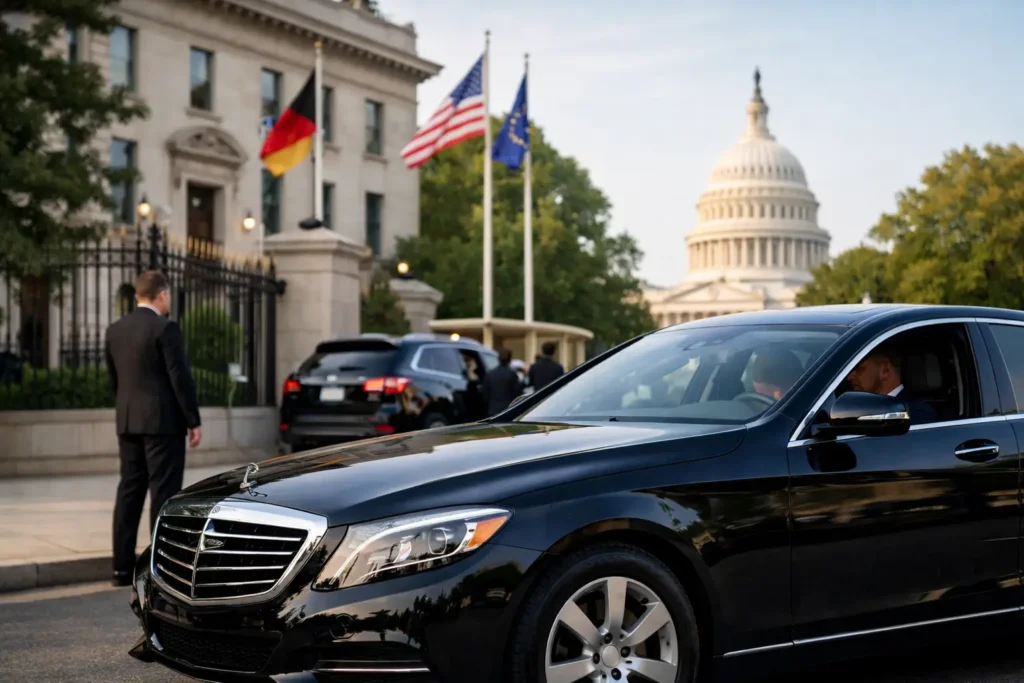
Washington DC Embassy Transportation Done Right

DCA vs IAD vs BWI: Which Airport Works Best with a Private Car? (2026)