
Washington does not reward a loose transportation plan. A delayed motorcade can close a corridor without warning, an address can sit behind a security checkpoint, and a 15-minute cross-town drive can become a 45-minute calculation when Congress is in session or a major event is underway. This Washington DC executive transportation guide is built for travelers and planners who treat punctuality, privacy, and presentation as essential parts of the engagement.
Executive ground travel is not simply about reaching the destination. It is about arriving prepared, composed, and on schedule – whether the itinerary begins at Reagan National, Dulles, a Tysons headquarters, Capitol Hill, or a private residence in Bethesda. The right plan protects time and preserves the standard expected by clients, colleagues, and distinguished guests.
Washington DC Executive Transportation Guide: Start With the Itinerary
The best executive transportation decisions are made before wheels touch the road. Share the full schedule, not just a pickup address and final destination. A professional chauffeur team needs the flight details, terminal, meeting time, number of passengers, luggage profile, venue entrance, and any planned stops in between.
In Washington, a meeting time is rarely the right arrival time. For a board meeting, investor presentation, government appointment, or formal dinner, build in time to clear building security, use the correct entrance, gather materials, and settle before the first handshake. A vehicle arriving exactly at the appointment time has arrived late.
This is especially true for multi-stop days. An executive may land at DCA, meet a client downtown, continue to a lunch in Georgetown, and finish at an evening function in National Harbor. Each transition has its own traffic pattern, curbside rules, and timing risk. A reservation-driven plan allows the day to move with authority rather than improvisation.
Choose the Vehicle for the Occasion, Not Just the Headcount
A premium sedan is an excellent choice for one or two executives traveling light. It provides a discreet, professional arrival for airport transfers and individual corporate travel. A luxury SUV offers more luggage capacity and a stronger fit for senior leaders, families, or travelers who prefer additional space and presence.
For delegations and small executive groups, a Mercedes Sprinter van can keep the party together while maintaining a polished experience. It is often more practical than arranging several sedans, particularly when passengers need to speak, review an agenda, or arrive as a unified group. Stretch limousines and larger charter vehicles have their place as well, especially for weddings, formal celebrations, roadshows, and coordinated guest movement.
The trade-off is straightforward: the smallest suitable vehicle may be efficient, but it may not create the right environment for luggage, wardrobe changes, confidential conversation, or a high-profile arrival. When the occasion carries reputational weight, choose comfort and capacity with room to spare.
Airport Transfers Require More Than Flight Tracking
Dulles International Airport and Reagan National Airport serve very different travel patterns. Dulles often requires more time for airport access and can involve longer drives to downtown Washington, Maryland, and central Northern Virginia. Reagan National is close to the city, yet proximity does not eliminate delays caused by terminal congestion, road restrictions, or evening traffic along the Potomac.
A polished airport transfer begins with accurate flight information and a clear decision about the pickup method. Curbside coordination may suit a traveler carrying minimal luggage and moving quickly. Inside meet-and-greet service can be the stronger choice for VIPs, first-time visitors, international travelers, families, or guests who should never have to search for a vehicle after landing.
For departures, calculate from the departure terminal backward. Consider the day of the week, airline check-in requirements, TSA timing, weather, and whether the traveler is leaving from downtown, McLean, Reston, or another location farther from the airport. A good chauffeur service plans for the real trip, not the map estimate.
Build Flexibility Into Flight Days
Flights change. Meetings run long. A client may request a stop between the airport and hotel. Executive transportation should accommodate reasonable changes without turning a minor adjustment into a logistical problem.
The most reliable approach is to provide a current mobile contact for the traveler or assistant, confirm the preferred communication method, and disclose any schedule sensitivity before the day of service. If the traveler must be at a private aviation terminal, a diplomatic venue, or a secure facility, state that early. Details that appear small during booking can determine whether the arrival feels effortless or hurried.
Treat Security and Discretion as Service Standards
Washington is a city of public institutions, private negotiations, political visibility, and sensitive conversations. Discretion is not an extra for executive travelers. It is part of the assignment.
A professional chauffeur understands that the vehicle is a private extension of the workday. That means measured communication, respect for confidentiality, appropriate attire, and an awareness that passengers may need quiet rather than conversation. It also means knowing when a route or curbside arrangement is unsuitable because it draws unnecessary attention or creates an avoidable delay.
For government travelers, legal teams, executive offices, and high-profile guests, share only the operational information needed to deliver the service. Avoid broadcasting itineraries across a group chat or adding last-minute passengers without notice. A controlled travel plan protects both the schedule and the people on it.
Account for DC Traffic, Events, and Access Rules
Traffic in the DMV is not one condition. It changes block by block and hour by hour. Downtown Washington can slow dramatically around major hearings, demonstrations, sporting events, conventions, and presidential or diplomatic activity. Georgetown presents narrow streets and limited curb access. Capitol Hill, the White House area, and certain hotel entrances can be affected by security perimeters or temporary restrictions.
An experienced transportation partner watches these variables, but clients and planners should still provide context. Say if the destination is a gala with a formal drop-off window, a conference with a designated motor coach entrance, or a restaurant where the reservation is difficult to hold. The service team can then determine whether an earlier departure, standby time, or an alternate approach makes sense.
For wedding and event transportation, do not rely on one address alone. Confirm the ceremony entrance, reception entrance, photo locations, loading zones, and final departure point. In a city where streets can be closed with little notice, precision gives the celebration its calm.
When Hourly Service Is the Better Decision
Point-to-point travel works well when the schedule is fixed. Hourly chauffeur service is often the more intelligent choice when an executive’s day includes uncertain meeting lengths, multiple stops, or a need to keep a vehicle nearby.
Consider hourly service for these situations:
- A client roadshow with several offices across Washington, Arlington, and Tysons.
- A visiting executive who may need to adjust meetings during the day.
- A formal event where departure timing depends on the host or security clearance.
- A wedding party or VIP group requiring coordinated movements between venues.
The cost can be higher than a single transfer, but the value is control. There is no need to request a new car after every meeting, manage uncertain pickup times, or leave a principal waiting at the curb. For schedules where time carries a premium, dedicated availability is often the more economical decision in practice.
Give Your Transportation Partner a Proper Brief
Exceptional service begins with clear instructions. The booking should identify the lead passenger, the person authorized to make changes, and the person the chauffeur should contact at pickup. If there are preferences regarding temperature, music, conversation, route selection, or assistance with luggage, communicate them in advance.
For group transportation, designate one on-site coordinator. Multiple decision-makers can create confusion at precisely the moment guests need direction. A single point of contact keeps departures orderly and allows the chauffeur team to focus on timing, safety, and guest experience.
It is also wise to state the dress code and nature of the occasion. A vehicle supporting a black-tie wedding, a diplomatic reception, or a Fortune 500 board visit should reflect the setting. Transportation is visible. Your reputation travels with you.
Reserve the Experience Your Schedule Deserves
For routine transfers, advance reservations provide the strongest selection and planning window. For complex itineraries, large groups, and peak dates, booking early is not merely convenient. It is how you secure the appropriate fleet, coordinate chauffeurs, and protect every transition on the schedule.
Monarch Bus & Limo brings this level of preparation to executive travel throughout Washington, DC, Northern Virginia, and Maryland, with chauffeur-driven vehicles selected for the occasion and concierge-style support when plans change. Same-day availability can be valuable, but a well-built reservation remains the standard for high-stakes travel.
The final measure of executive transportation is simple: no one should be thinking about the vehicle when the door opens. They should be ready for the meeting, the celebration, the flight, or the moment that matters. Reserve accordingly, arrive with purpose, and let the journey reflect the caliber of the person stepping out.
Keep Discovering
Ready to Ride, Anywhere in the DMV
Popular Services
Explore the Fleet
Service Areas
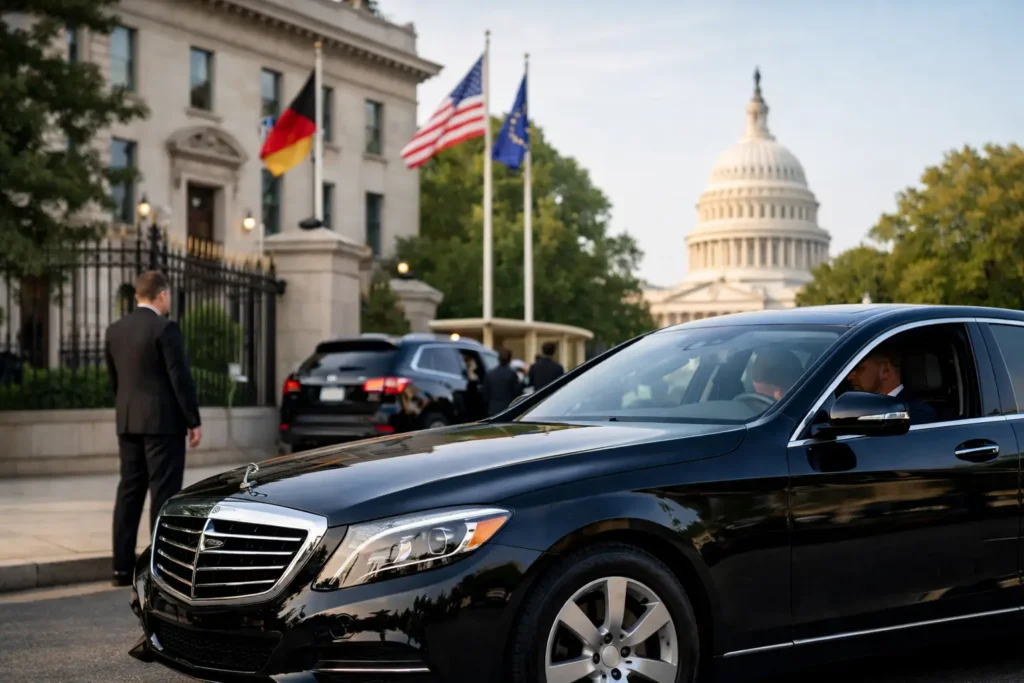
Washington DC Embassy Transportation Done Right

Best Vehicles for Executive Travel, Chosen Well