
An embassy delegation does not simply need a ride. It needs a controlled, dignified movement plan that protects schedules, respects protocol, and makes every arrival feel deliberate. To organize embassy delegation transportation properly, planners must coordinate far more than vehicle capacity. They must account for diplomatic timelines, airport procedures, security direction, luggage, language needs, venue access, and the impression made at every curb.
In Washington, DC, where embassies, government offices, international institutions, and high-level events operate on exacting schedules, transportation becomes part of the delegation’s public presence. A late vehicle, an uncertain pickup point, or an unprepared chauffeur can distract from the purpose of the visit. A polished plan lets principals, staff, and hosts focus on the engagement ahead.
Begin With the Delegation’s Protocol and Purpose
Every movement should begin with a clear understanding of who is traveling and why. A small advance team attending a series of meetings has different requirements than an ambassadorial party arriving for a formal reception, a trade mission, or a multi-day summit. The transport plan must match the occasion.
Confirm the delegation roster early, including principals, aides, interpreters, security personnel, press representatives, and local hosts. Not every traveler should necessarily ride together. Separating the principal party from support staff can preserve quiet preparation time, protect privacy, and keep departures orderly. It can also prevent a delayed baggage claim or credential issue from holding up the full motorcade.
Protocol preferences matter as well. Ask the designated point of contact how arrivals should be handled, who will greet the group, whether vehicles should stage visibly or remain nearby, and whether any seating arrangements have been requested. These are not decorative details. They signal preparation and respect.
How to Organize Embassy Delegation Transportation by Itinerary
An itinerary is only useful when it can survive real conditions. Embassy delegations often move between airports, hotels, residences, government buildings, meeting venues, restaurants, and formal events, sometimes with little margin between appointments. Build a transportation schedule that is precise without being fragile.
Start with confirmed flight details, but do not plan only around the scheduled arrival time. Account for deplaning, immigration and customs where applicable, checked baggage, terminal walking distances, and the possibility that travelers exit through a different point than expected. At Dulles International Airport and Reagan National Airport, the right meeting instructions can save valuable time and prevent a principal from waiting in a public area while staff search for a vehicle.
For each transfer, document the requested pickup time, actual vehicle arrival time, pickup location, destination entrance, estimated drive time, and a reasonable operational buffer. In central Washington, DC, street closures, official events, construction, and peak traffic can alter even familiar routes. A chauffeur team should monitor conditions and use approved alternatives when necessary, while keeping the client contact informed only when action is required.
The strongest plans include a primary route and a contingency route. That does not mean treating every trip as a security operation. It means recognizing that a delegation’s calendar carries consequences. If an arrival is scheduled before a ministry meeting or formal dinner, the transportation provider should have enough lead time and local awareness to protect the schedule.
Build Realistic Buffers, Not Empty Waiting Time
Excessive padding can frustrate an executive delegation, especially when a schedule is already dense. Too little padding creates avoidable pressure. The balance depends on the event’s importance, the location, the time of day, and the traveler profile.
For a straightforward hotel-to-office transfer, a modest buffer may be sufficient. For airport arrivals, credentialed venues, formal receptions, or movements during major downtown events, a larger margin is prudent. The goal is not to make guests wait. It is to make punctuality appear effortless.
Select Vehicles That Respect Rank, Group Size, and Luggage
Vehicle selection should be intentional. A luxury executive sedan may be ideal for a principal and one aide. A luxury SUV offers additional space, a commanding presence, and flexibility for luggage or security considerations. Mercedes Sprinter vans serve delegation groups well when travelers need to remain together, converse privately, or move comfortably between engagements.
The right fleet mix is often more sophisticated than assigning one large vehicle to everyone. A principal vehicle, a separate support vehicle, and an executive van for staff can improve timing and comfort. It also permits each group to depart according to its own schedule when the itinerary changes.
Do not overlook luggage. International delegations may arrive with presentation materials, garment bags for formal functions, equipment, or gifts requiring careful handling. Confirm the volume before dispatching vehicles. A beautiful sedan that cannot accommodate the party’s luggage is not a luxury solution.
Presentation also matters. Vehicles should arrive immaculate, properly maintained, and appropriate to the occasion. The cabin should be quiet and comfortable, with a chauffeur who understands that discretion is part of the service. For embassy guests, the vehicle is often the first private setting they experience after a flight and the final impression before a major engagement.
Make Chauffeur Standards Part of the Plan
A delegation chauffeur must offer more than expert driving. They should be composed, formally presented, punctual, and briefed on the day’s essential details. They need to know the correct names, pickup sequence, vehicle assignment, destination entrance, and authorized client contact.
Discretion is central. Chauffeurs should not discuss guest identities, visit purposes, meeting locations, or travel patterns. They should avoid unnecessary conversation while remaining attentive and courteous. If a passenger prefers quiet, that preference should be honored without explanation.
Clear communication prevents small errors from becoming visible problems. The chauffeur should know exactly whom to call if a flight changes, a meeting runs over, or a pickup location shifts. The delegation should have one reliable transport contact rather than a chain of uncertain messages.
When arranging transportation for diplomatic guests, share only the operational information necessary for excellent service. Use designated contacts, protect itineraries, and follow the direction of the embassy, host organization, and relevant security personnel. Publicly broadcasting schedules, names, or vehicle details is never an appropriate substitute for professional coordination.
Coordinate With Venues Before the Delegation Arrives
A polished arrival can fail at the final 50 feet. Many Washington venues have restricted entrances, loading limitations, designated curb zones, or security checkpoints that affect where a chauffeur may wait. Confirm these details with hotels, event organizers, and receiving offices before the day of travel.
Ask which entrance is appropriate for the delegation, whether advance vehicle information is required, where chauffeurs should stage, and how long vehicles may remain at the curb. If a formal event has staggered arrivals, establish the sequence in writing. The host team, chauffeur team, and delegation liaison should all be working from the same plan.
For multi-stop programs, identify practical waiting locations between appointments. Keeping a vehicle close may be preferable when a meeting end time is uncertain. At other times, off-site staging may be the better choice for privacy and traffic flow. The right decision depends on the venue, the schedule, and the host’s operational requirements.
Prepare for Changes Without Creating Drama
Delegation schedules change. Flights are delayed, meetings extend, principals add a stop, and a host may request a revised departure order. The quality of the transportation program is revealed by how quietly it handles those changes.
Choose a provider that can offer live coordination, responsive dispatch, and enough fleet flexibility to accommodate reasonable revisions. Same-day availability can be valuable, but it should not replace advance planning. The more significant the delegation, the more important it is to reserve the correct vehicles and chauffeurs early.
Provide one decision-maker with authority to approve changes. Without that clarity, a chauffeur may receive conflicting instructions from an aide, venue representative, and event planner. A single transportation liaison protects the delegation from confusion and gives the provider a dependable source for real-time updates.
At Monarch Bus & Limo, this level of coordination is treated as part of the guest experience, not an add-on. From executive sedans and luxury SUVs to Sprinter vans and larger charter solutions, each assignment is planned to support a composed, distinguished arrival throughout the DMV.
Treat the Final Departure With Equal Care
The departure is often rushed because everyone is focused on the event itself. Yet a poorly timed exit can leave guests waiting at the curb, separate a principal from the correct vehicle, or create an awkward close to an otherwise flawless program.
Confirm departure timing with the host before the event concludes. Have the chauffeur staged according to venue rules, with the vehicle assignment and pickup point reconfirmed. If travelers are heading to the airport, calculate the departure time from the required airport arrival, not from a hopeful estimate of traffic.
A distinguished delegation should never have to wonder where its transportation is, who is driving, or whether the next engagement remains on schedule. Reserve the right vehicles, appoint one clear liaison, and give every arrival the ceremony it deserves. Your reputation travels with you.
Keep Discovering
Ready to Ride, Anywhere in the DMV
Popular Services
Explore the Fleet
Service Areas
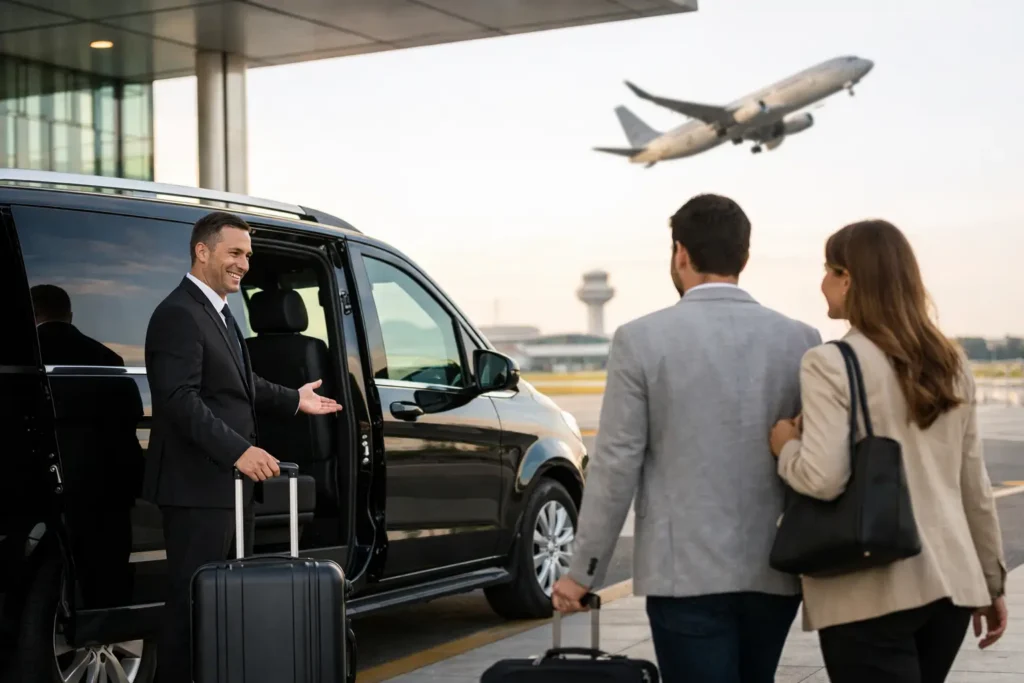
A Private Airport Shuttle Alternative That Fits
Maryland Wedding Guest Transportation That Performs