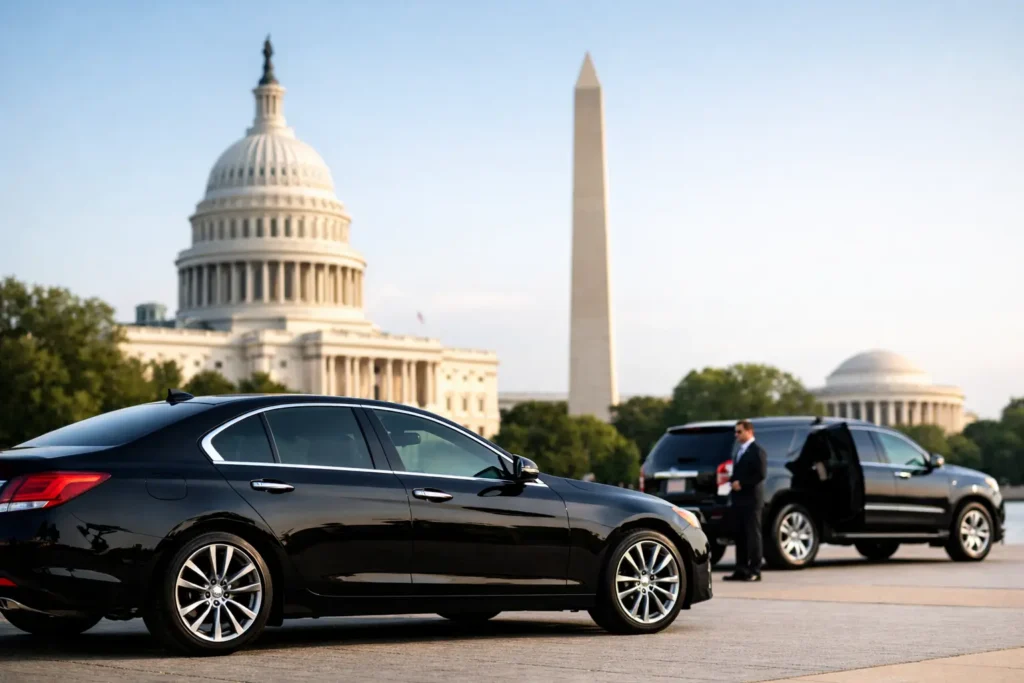
A wedding timeline can look perfectly composed on paper and still unravel at the curb. When should wedding transportation arrive? Earlier than the first passenger needs to depart, with enough reserve to handle a misplaced boutonniere, a photo delay, a crowded hotel entrance, or DMV traffic without turning a grand arrival into a rushed one.
For most weddings, the vehicle should be in position 15 to 30 minutes before the scheduled pickup time. Larger wedding parties, formal venues with restricted access, and multi-vehicle plans deserve a wider cushion. The goal is not simply to be on time. It is to give every arrival the calm, polished feeling the occasion deserves.
When Should Wedding Transportation Arrive at Each Stop?
The answer changes by leg of the day. A sedan collecting a couple for a private first look has different demands than a motorcoach moving 40 guests from a Washington, DC hotel to a ceremony. Build the schedule around the moment passengers must be ready to leave, then allow time for boarding, loading, traffic, and venue procedures.
The first pickup: arrive 15 to 30 minutes early
For the couple, parents, or wedding party, plan for the chauffeur to arrive 15 minutes early at a private residence, hotel, or getting-ready suite. Thirty minutes is wiser when several people will board, luggage or garment bags are involved, or the pickup is at a large property where the correct entrance may not be obvious.
This early arrival is not time to begin the drive. It is the protection around the departure time. A professional chauffeur can confirm the pickup point, prepare the cabin, assist with doors, and be ready the moment the party appears. That small margin preserves composure if hair and makeup runs late or someone needs one final photograph.
For a bride or groom traveling separately, schedule vehicles independently. Do not assume both parties will be ready at the same time, even if they are staying in the same hotel. Separate pickup times keep one group from waiting in the lobby while the other finishes preparations.
The ceremony arrival: target 20 to 30 minutes before guests
Wedding party transportation should generally arrive at the ceremony venue 20 to 30 minutes before guests are expected. This gives attendants time to use the restroom, straighten attire, receive final instructions, and enter without crossing paths with arriving guests.
The couple’s arrival depends on the ceremony plan. If they are being photographed before the ceremony, they may arrive much earlier. If one partner is making a traditional entrance, that vehicle should be staged discreetly before the processional begins, not pulling up as guests are already watching the aisle.
At churches, country clubs, historic estates, and urban venues, confirm the exact staging area in advance. Some properties require commercial vehicles to use a service entrance or wait off-site until called. A beautiful vehicle at the wrong gate is still a delay.
Guest shuttles: open boarding 15 minutes before departure
For guest transportation, publish a departure time and ask the shuttle to arrive early enough to begin boarding at least 15 minutes beforehand. Guests move at different speeds, especially when traveling from a hotel, carrying wraps, or escorting children and older relatives.
A single shuttle departure should usually leave five minutes after the stated time, not 20 minutes later. Waiting too long penalizes every punctual guest and can jeopardize the ceremony. If a guest is not aboard by the final boarding call, they should use a designated backup plan rather than holding an entire coach.
If the trip from hotel to venue is more than 20 minutes, traffic conditions are unpredictable, or the group is sizable, consider two departure waves. An earlier shuttle protects guests who prefer extra time, while a second departure serves those who need a few more minutes to get ready. It is a more gracious arrangement than betting the ceremony on one crowded bus.
Reception transfers: factor in the photo schedule
The trip from ceremony to reception is where polished planning often disappears. If the wedding party will take portraits after the ceremony, they may need a separate vehicle schedule from guests. Guests can depart promptly, while the couple and attendants remain for photos and travel later.
For a reception entrance, aim to arrive 10 to 15 minutes before the announced introduction. That gives the party time to touch up makeup, collect personal items, and line up with the coordinator. Nobody wants the band to build anticipation while the wedding party is still searching for a parking entrance.
When the ceremony and reception are in different locations, build a realistic travel window. Use the travel time at the same day of week and time of day whenever possible, then add 15 to 20 minutes for traffic and unloading. In the DC region, a route that appears simple at noon can change dramatically near rush hour, during a game, or around a road closure.
The getaway car: stage before the final send-off
A getaway vehicle should be at the reception venue 30 to 45 minutes before the scheduled exit. The chauffeur can identify the best departure point, coordinate with venue staff, and ensure the vehicle is positioned without interrupting guest flow.
The couple should not have to wait outside while a vehicle circles the block. If the send-off involves sparklers, confetti, or a large guest crowd, confirm where the vehicle can safely pull up and whether the venue has restrictions. A refined exit is choreographed quietly, well before the last dance ends.
The Details That Change the Timing
Not every wedding needs the same buffer. Add time when the plan involves a large bridal party, multiple pickups, formalwear, children, elderly guests, a remote venue, or a heavily trafficked route. A vehicle carrying six people in a luxury SUV boards much faster than a Sprinter van carrying a full wedding party, and a charter vehicle requires more curb space and coordination than a sedan.
Venue access matters just as much. Hotels may have a busy porte cochere. Downtown locations may require loading zones. Private estates can have narrow drives, gravel paths, or limited turnaround space. Share the venue contact, entrance instructions, and a day-of coordinator’s number with the transportation provider well before the wedding date.
Weather deserves its own margin. Rain slows boarding, affects formalwear, and can turn a short walk into a carefully managed procession. In winter, allow additional time for road conditions. During summer, early vehicle arrival offers a cool, prepared cabin rather than an unnecessary wait in the heat.
Build a Transportation Timeline Backward
Start with the non-negotiable moment: the ceremony start, cocktail-hour opening, reception introduction, or final exit. Then work backward from there. Include travel time, a traffic cushion, unloading, and the time people need to be fully ready before departure.
For example, if a wedding party must be inside the ceremony venue by 4:30 p.m. and the drive is estimated at 25 minutes, a 3:50 p.m. departure may be appropriate. That allows 25 minutes of travel, 15 minutes of traffic protection, and time to arrive, unload, and settle before guests begin to appear. The vehicle itself should arrive at the pickup location around 3:20 or 3:30 p.m., depending on party size and access.
Do not confuse a vehicle’s arrival time with the party’s departure time. Put both on the final itinerary. “Vehicle arrives at 3:25 p.m.; wedding party departs at 3:45 p.m.” leaves no room for interpretation.
Assign one transportation point person as well. It can be a planner, maid of honor, best man, or trusted family member. This person should have the chauffeur dispatch contact, venue contacts, passenger counts, and the final schedule. The couple should not be managing a curbside question in formalwear.
Choose Reliability Over a Tight Schedule
A transportation plan that leaves no room for reality is not efficient. It is fragile. The few extra minutes built around each pickup protect the experience, the photography schedule, and the comfort of the people you invited to celebrate.
For an elevated wedding in Washington, DC, Northern Virginia, or Maryland, Monarch Bus & Limo can coordinate the timing, fleet, and chauffeur details that keep every movement composed. Reserve the right vehicle early, provide the full itinerary, and let the day unfold with the assurance that your arrival will command the moment it was meant to hold.
Keep Discovering
Ready to Ride, Anywhere in the DMV
Popular Services
Explore the Fleet
Service Areas

Conference Transport Example for Executive Events

Dulles Airport Car Service Review